
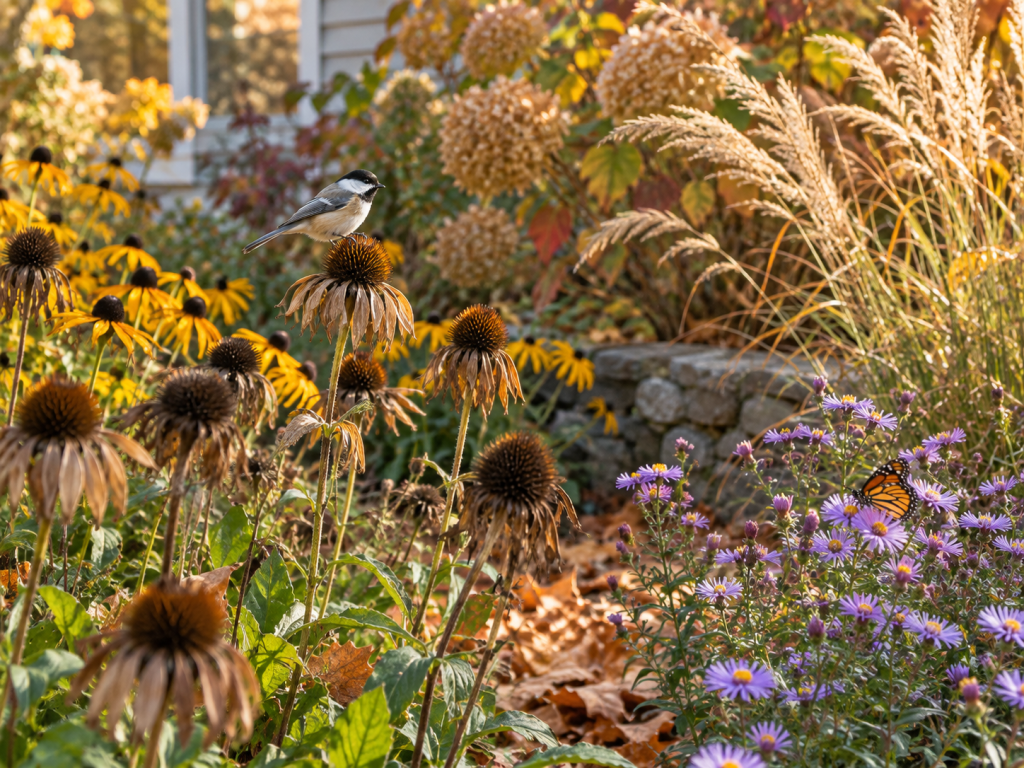
Fall garden cleanup doesn’t have to mean cutting everything down and clearing every leaf away. In fact, some of the things gardeners traditionally remove in autumn can provide valuable food, shelter and habitat for birds, pollinators and other beneficial wildlife throughout the colder months.
A few simple changes to your fall gardening routine can help create a healthier backyard habitat while still keeping your landscape attractive and ready for winter.
At Bayview Garden Nurseries, we can help you choose plants and practical fall gardening strategies that support wildlife while fitting naturally into your home landscape.
1. Leave Some Seed Heads Standing
Before cutting back every perennial, take a closer look at what you have.
Plants such as coneflowers, black-eyed Susans and other seed-producing perennials can provide a natural food source for birds. Their stems and seed heads also add texture and interest to the winter landscape.
You don’t have to leave the entire garden untouched. Selectively keeping some sturdy perennials standing can provide wildlife benefits while maintaining a neat appearance.
Fall garden tip: Focus cleanup on damaged, diseased or unattractive growth and consider leaving healthy seed-bearing plants until late winter or early spring.
2. Think Twice Before Removing Every Leaf
Fallen leaves are more than yard debris. A light layer of leaves beneath trees, shrubs and garden beds can provide overwintering habitat for insects and other small organisms that are an important part of the garden ecosystem.
Leaves can also help insulate soil and eventually return organic matter to the garden as they decompose.
Rather than removing every leaf from the property, consider moving some from lawns and walkways into appropriate garden beds or naturalized areas.
3. Plant for Birds and Wildlife
Fall is an excellent time to look at your landscape and identify places where additional trees, shrubs and perennials could provide food or shelter.
Plants that produce berries, seeds, nuts or dense branching can be especially valuable. A landscape containing different layers — including trees, shrubs, perennials and ground-level plantings — can provide more opportunities for wildlife than a landscape dominated by lawn.
When selecting plants, consider more than how they look in spring and summer. Ask what they contribute during fall and winter as well.
Bayview Garden Nurseries can help you select trees, shrubs and perennials suited to your landscape conditions and gardening goals.
4. Provide Shelter Through the Colder Months
Wildlife needs protection as well as food.
Evergreen trees and shrubs can provide year-round cover, while dense deciduous shrubs, ornamental grasses and standing perennial stems can create additional shelter.
Even a relatively small garden can become more wildlife-friendly when plants are arranged to provide a mixture of open areas and protected spaces.
This is also a good reason not to make the fall garden too tidy. Leaving selected areas undisturbed until spring can provide valuable winter habitat.
5. Remember Water
Water can become harder for birds and other wildlife to find as temperatures fall.
If you maintain a birdbath or other shallow water source, continue keeping it clean and filled as long as conditions allow. During colder weather, homeowners who regularly feed or attract birds may also consider options designed to keep water accessible when temperatures drop.
6. Plan Now for a More Wildlife-Friendly Spring
Fall is a good time to evaluate what your garden may be missing.
Do you have plants that flower at different times of year? Are there berry-producing shrubs? Could another evergreen provide winter shelter? Are there areas where pollinator-friendly perennials could be added next spring?
Making those observations now can help you develop a better planting plan for the coming season.
If you are thinking beyond individual plants and considering a larger change to your property, Bayview’s landscape design services can help bring those ideas together into a more complete plan for your outdoor space.
Frequently Asked Questions About Fall Gardening for Wildlife
Should I cut back all my perennials in the fall?
Not necessarily. Some perennial seed heads provide food for birds, while hollow stems and plant debris may provide overwintering habitat for beneficial insects. Diseased or damaged material should generally be removed, but healthy plants can often be selectively left until spring.
Is it okay to leave fallen leaves in my garden beds?
In many situations, yes. A moderate layer of leaves can protect soil, add organic matter and provide habitat. Avoid allowing thick, matted layers to smother smaller plants or create problems in areas where excess moisture is a concern.
What plants are good for attracting birds in fall and winter?
Look for a combination of seed-producing perennials, berry-producing shrubs, evergreens and other plants that provide natural food or shelter. The best choices depend on your available space, sunlight, soil and landscape conditions.
Is fall a good time to plant trees and shrubs for wildlife?
Yes. Fall can be an excellent planting season because cooler temperatures reduce heat stress while the soil can remain warm enough for root development. Ask the Bayview Garden Nurseries team about appropriate fall planting and watering practices.
Does a wildlife-friendly garden have to look messy?
No. Wildlife-friendly gardening doesn’t require abandoning good landscape design. Selectively leaving seed heads, incorporating attractive evergreens and berry-producing shrubs, and allowing leaves to remain in appropriate areas can create habitat while maintaining an intentional appearance.
A Few Small Changes Can Make a Difference
Creating a wildlife-friendly landscape doesn’t require turning your entire yard into a natural area. It can begin with something as simple as leaving a few seed heads, preserving some fallen leaves, adding a berry-producing shrub or choosing plants that provide both seasonal beauty and habitat.
As you prepare your garden for winter, stop by Bayview Garden Nurseries for help choosing trees, shrubs and perennials that can add beauty to your landscape while providing food and shelter for birds, pollinators and other beneficial wildlife.
A better habitat can start with the plants already in your garden — and a few thoughtful choices about what you leave behind this fall.